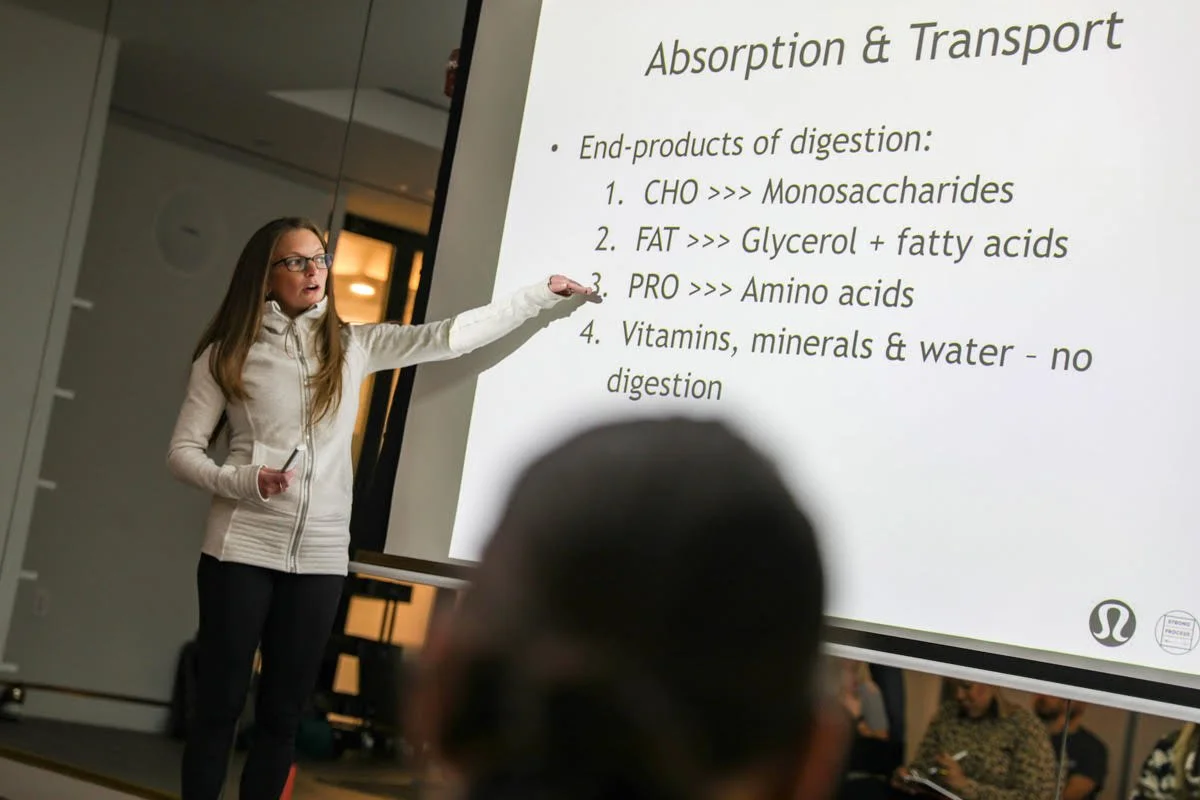
STANFORD WOMEN’S ROWING WELCOMES DR. RACHELE POJEDNIC TO THE TEAM!

Dr. RACHELE POJEDNIC
Rachele Pojednic, PhD, EdM, FACSM, is the Director of Education at Stanford Lifestyle Medicine, teaches HumBio 132, and recently joined Stanford Women’s Rowing as a sports-nutrition and performance coach. “Dr Pojo,” as she’s known in the boathouse, is a respected expert, researcher, global speaker, and thought leader in nutrition and exercise science. She is the Chief Science Officer at RestoreLabs, Restore Hyperwellness, and Founder of Strong Process Education.
Additional information on Dr Pojednic and her work can be found here: https://www.rachelepojednic.com
The Rowing Association caught up with Dr Pojednic this Fall to learn more about her role within WROW.
TRA: Thank you for working with Stanford Women’s Rowing. Can you tell us about the work you are doing with the team?
Dr. Pojednic: Over the past three years, my work with Stanford Women’s Rowing has focused on integrating evidence-based sport nutrition into the team’s training cycles and competitive goals. I meet with the athletes regularly, both as a team and individually, to make sure their fueling strategies match the physiological demands of their training and racing. One of my favorite things about working with the women is that we have built a culture that treats nutrition as an essential part of performance, just like technique or strength training. This has been championed by the coaches, the captains and seniors, and every woman on the team. Many of them (including the coaches) have even taken my HUMBIO132 Sports Nutrition course offered in the winter quarter. And, fun fact, I was actually a coxswain in college, and am married to one of the men’s coaches, so I have a unique perspective on a sport that a lot of professionals in the nutrition space do not!
TRA: What aspects of sport nutrition are unique to female athletes and rowers specifically?
Dr. Pojednic: While the foundations of training and fueling are fundamentally the same between men and women, female athletes experience dynamic hormonal shifts that can influence energy availability, recovery, and even how substrates are utilized during training. This means nutrition is never static. For example, women tend to rely more on fat for fuel, whereas men use proportionately higher levels of carbohydrates. That has implications for nutrient intake and body composition. For rowers, the additional challenge is the sheer volume of work: long aerobic pieces layered with high-output race intensity and several lifting sessions throughout the week. Coordinating timing of nutrients, hydration, and supplementation is key.
TRA: Can you tell us about balancing peak performance with health and safety in your work?
Dr. Pojednic: Peak performance only happens when an athlete is healthy on every level. So those two things are always front of mind in my approach. A major part of my work is identifying early signs of underfueling, overtraining, and macro- or micronutrient deficiencies that could compromise performance, and thus safety. The athletes and coaches track key biomarkers alongside performance and recovery metrics over their training periods to ensure they can train hard without tipping into risk. If we are doing it right, athletes feel strong, energized, resilient, and excited to train.
TRA: Rowing is a team sport requiring high-level individual performance. Assuming individuals have different physiological needs, what aspects are individualized versus team-based?
Dr. Pojednic: This is a great question, and it is SO important when working with a team sport. While there is a foundational team-wide strategy, such as carbohydrate timing, hydration, protein distribution, and overall availability to support heavy training, every athlete’s physiology, hormonal changes, metabolism, and recovery profile is slightly different. So, individual plans and strategies are used to fine-tune energy intake and supplementation. Some athletes need more support around iron status, some around GI tolerance, and others around fueling for multiple sessions per day while carrying a heavy course load that may limit time in the dining hall. The athletes work with me and the team dietitian, Angela, to make sure they know what the team goals are, how they need to modify for their unique needs, and how to make sure they have the right fuels available at the boathouse and on campus.
TRA: If I am an athlete you are working with, what does my interaction with you look like?
Dr. Pojednic: We meet as a team regularly to cover education, fueling expectations, and seasonal planning. Individually, we sit down to map out their training week, travel demands, health history, and eating patterns to create a fueling approach that feels doable and sustainable. I may review labs, track trends, or monitor symptoms of under-recovery if needed. Between meetings, I am available for adjustments because fueling is dynamic, especially for student-athletes juggling academics, travel, and training. In between times meeting with me, they also have a great team of dietitians on staff in the athletic department that support by providing fueling stations and counseling on campus.
TRA: Stanford Student-Athlete Dining has evolved over time. How would you describe it now, and how is it as a resource for this project?
Dr. Pojednic: I’m new here, so my perspective is limited! But, from what I have observed, the dining program has made enormous strides in offering performance-aligned meals, clear nutrition labeling, and options that meet the needs of high-volume endurance athletes. Chef Joe Guinto, the executive chef of athlete dining, takes his work incredibly seriously, getting to know the athletes and their needs. He and the athlete dining facility at large are true assets because having access to quality, nutrient-dense food consistently is one of the biggest predictors of good fueling habits. Through this incredible network, we are able to integrate reliable menu and food choice planning that align with the team’s performance goals.
TRA: Coach Hamrick often highlights the “fun” with which WROW attacks racing. How does fun play into your work?
Dr Pojednic: Fun is honestly one of my biggest performance hacks. Whether I am in the classroom or working with athletes one-on-one, I treat nutrition as something we get to giggle about and experiment with, not a list of rules to stress over. I make a point of learning the team’s quirks, inside jokes, and the things that reliably make them crack up. Our sessions usually involve plenty of good-natured teasing, eye-rolls, and laughter. This not only makes the sessions engaging, but it makes the information stick and the habits feel natural. When athletes associate fueling with fun instead of stress, performance improves almost automatically.
TRA: Can you give an example of a great performance linked to your work?
Dr. Pojednic: I would never take direct credit for an athlete’s accomplishment, and I was only one tiny element of their success, but the women did win the National Championship last year!! Over the past three years, I have watched so many of the women transform once they are appropriately fueled. Negative splits that were not possible before become achievable when they realize the power of a well-timed packet of gummy bears. Power curves improve because they are strategizing protein for muscle growth. Recovery strategies that include complete meals at lunch and dinner allow them to train at a high level day after day. One of my favorite moments is seeing an athlete who struggles with energy availability finally feel “normal strong” again because they’ve learned how to strategize their food throughout the day, and then go on to produce personal bests. Those quiet individual wins are the ones that lead to the podium ones.
TRA: Many in our community stay active long after Stanford. What work are you doing that speaks to the changing needs of athletes over time?
Dr. Pojednic: My work covers the full span of human performance, from optimizing fueling and recovery in college-aged athletes to understanding how those needs shift across the lifespan. A significant portion of my academic research has focused on how nutrition and exercise shape healthy aging and longevity, including published work on muscle physiology, supplementation, sarcopenia, and metabolic health. My early research examined how resistance training and targeted nutrition strategies influence muscle protein synthesis and performance metrics across different life stages. More recently, I have investigated emerging areas like Vitamin D and CBD supplementation and the metabolic effects of NAD+ and NR therapies. This research is aimed at identifying evidence-based strategies that preserve strength, function, and performance capacity from early adulthood through later life.
TRA: Looking ahead, what do you see in the future of performance nutrition for athletes both during college and beyond?
Dr. Pojednic: We are sitting at a really exciting precipice of personalized data. Understanding biomarkers, workload, and recovery allows us to make more precise and compassionate decisions about athlete health and performance. Yet, at the same time, it’s a ton of information that’s confusing and, often, not actionable. The next frontier is meaningful integration, with actionable recommendations. The foundational principles of performance nutrition will likely stay the same - from fueling adequately, to distributing protein, to supplementation regimens - but understanding an individual’s unique physiology will allow us to fine-tune those strategies with unprecedented precision. When we can layer training load, nutrition intake, genes, biomarkers, and biometrics into one coherent picture, we can tailor fueling and supplementation in a way that truly matches the athlete. This will help future rowers optimize performance in real time and will also give them a personalized roadmap for how their needs evolve after they leave campus. It is one of the most exciting and rapidly evolving areas of nutrition and performance, and I’m actively working on it in my lab.