SPRING ‘26 COACHES REPORT — MEN
Ted Sobolewski, Farwell Family Director of Men’s Rowing
This past April I was lucky enough to be at a dinner of roughly 40 alumni in honor of my predecessor Craig Amerkhanian. The dinner was intended to be a starting point for truly honoring and celebrating what Craig did for Stanford Rowing. For me it ended up being one of the highlights of the year.
A couple things struck me throughout the night. First, Craig is truly one of one. He brings an energy that can’t be matched or imitated, and I can only imagine how much fun it would have been to be here when the program was winning Varsity 8 IRA medals. The other thing that struck me was how similar the core values Craig laid out for the program are to what we talk about now. Craig spoke about Honor and Family and what he (and Bruce Springsteen) called the Working Life.
While we haven’t directly called it “Honor and Family”, we talk often in the program today about commitment and selflessness. It’s a tale as old as Stanford Rowing, but Stanford athletes have no shortage of things pulling at their time and attention. Making a commitment to this team is a big deal, and staying the course requires recommitment through many small tests throughout the year.
This is where the Working Life comes into play. No matter what is going on, you clock in to practice as a team and put an honest day’s work in. It's that commitment to showing up for one another and doing the work, that builds the familial bonds and trust you need to sit at the start line with freedom and belief, ready to race with abandon.
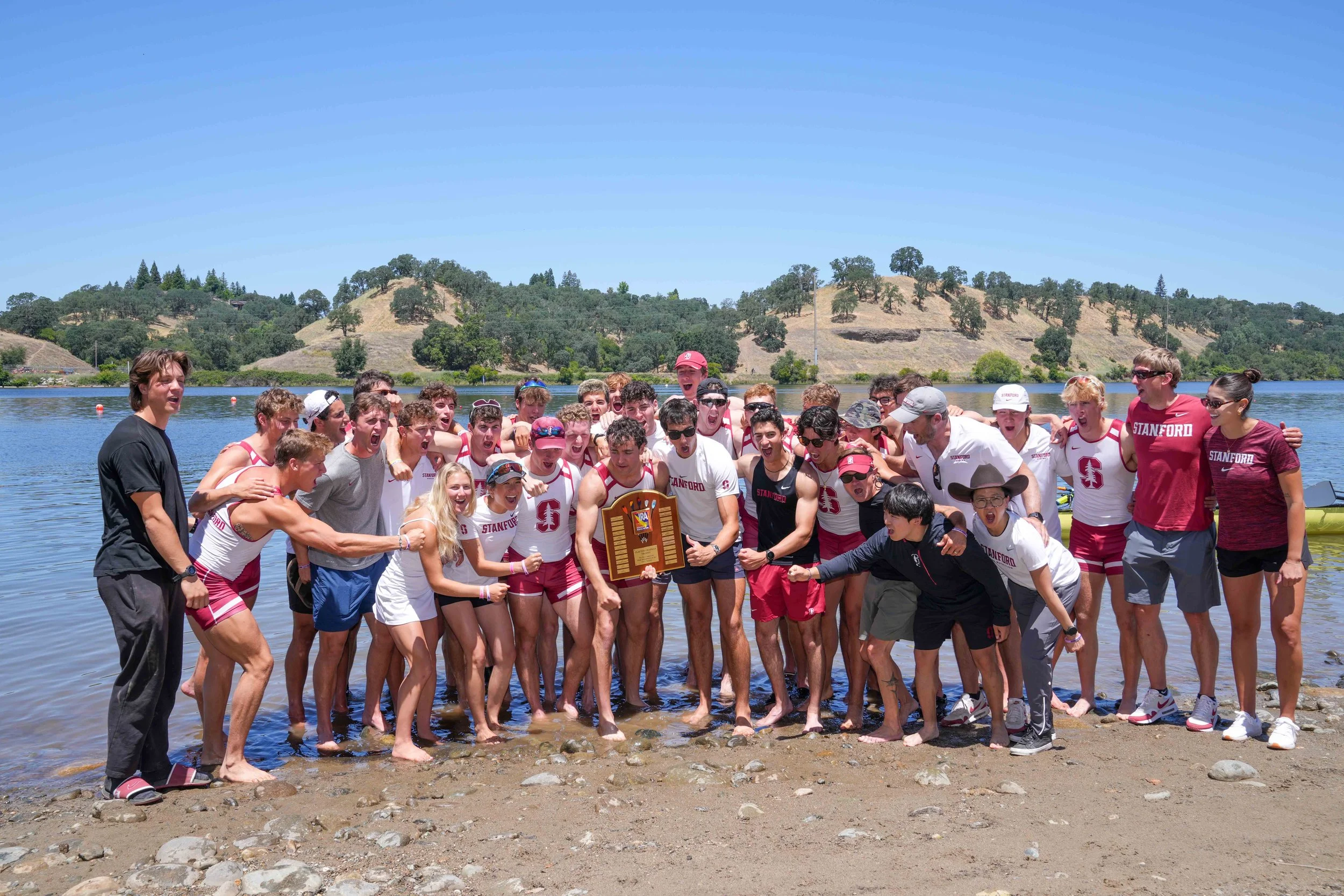
Over the last couple of years in particular, our team has done a lot of work, physically and culturally, and as much as ever, we had trust and we honored that on the racecourse. In doing so, we tied the program's best Ten Eyck finish, a mark that was set in 2009 by Craig's crews.
Much like 2009, it's a great time to be a part of Stanford Rowing, and I am so proud of what our team has become. When I say team, I mean everyone who has come together to support what we are doing. Six years ago, in the wake of our lowest moment as a program, we banded together resolute in our goal to come back better than before. After years of fighting and wondering if we could get there, I left the IRA this year feeling like Stanford was back.
Make no mistake, we're not quite “back” yet, and we're not finished building. But when I look at how our athletes matured this year and began to drive their own success, I have tremendous confidence in what's ahead if they continue to put the work in. This year was a good step, but there is another big one available to them if they choose to lean into their own understanding of Honor and Family and the Working Life.
It’s impossible to overlook the performance of our varsity, and the multi-year process of building the belief and trust necessary to get Stanford back into the race for the National Championship. I knew around February that it would be possible, but it was up to the athletes to execute, and execute they did. Some of these guys have carried the weight of getting this done for three or four years. I'm so happy for them and hope this performance helps us refocus on higher objectives.
Our Second Varsity put together the second-highest finish in program history, and anyone who watched their semi-final (before it was restarted 900m in) or the B-final will understand exactly what we mean by racing with abandon. Our Third Varsity competed for the first time since 2019, placed 11th, and set a new standard for how we conduct ourselves at that level. We return all but one athlete from those two crews, and with an excellent group of incoming frosh, I expect our internal competition to reach another level in 2027.
None of this happens without the people surrounding our athletes. John Pojednic and Niles Garratt bring an unwavering commitment to this program and to our student-athletes every single day. Our boatwright, Gabby Oliveira, has an unstoppable work ethic, keeps us on the water, and takes tremendous pride in her craft. And our support staff, Michaela in athletic training, Angela in nutrition, Kuinci in strength and conditioning, and Chelsea in physical therapy, works tirelessly to keep our athletes healthy and performing at their best.
Finally, I want to close by recognizing our outgoing seniors: James, Caspar, and Jacob. James and Caspar both served as captains and led this team through some genuinely difficult moments with steadiness and maturity. Through their leadership, they have left the program in a significantly better place than they found it, against long odds. I would go to battle with them and for them any day of the week, and I am sure they will continue to make the people and places they go next better.
I need to single Jacob out for walking on to our team and continuing one of the longest-standing and most meaningful traditions in Stanford Men's Rowing. Jacob started in his sophomore year, but he gave himself fully to this from day one and ended up having a huge impact on our 3rd varsity eight this year. He is a great example of what will power and a positive mindset can do. We will miss him next year.
To our alumni, families, and friends: thank you. Your belief in this program year after year has put us in the position we are in today. The support group we had with us at Lake Natoma was felt by all of us. I get the sense that the community is getting stronger every year, and we look forward to giving you something special to cheer for in 2027.
Thank you and GO CARD!
— Ted